

Most enterprises now run some form of hybrid cloud virtualization. Still, many IT teams wrestle with a basic question: which hypervisor should sit under all of this?
It’s a bigger call than it looks. Pick well, and you can significantly reduce infrastructure costs. Sometimes by as much as half. Pick wrong, and you bleed money through messy licensing, clunky hybrid‑cloud tie‑ins, and performance issues that show up months after go‑live.
This guide keeps it practical. You’ll see what really matters when choosing a bare‑metal hypervisor for a hybrid cloud. Also, why Sangfor aSV, a purpose-built Type 1 hypervisor designed for enterprise workloads, truly matters while selecting your preferred bare metal hypervisor.
What Is a Bare Metal Hypervisor, and Why Does It Matter for Hybrid Cloud?
A bare metal hypervisor, also called a Type 1 hypervisor, runs directly on physical hardware with no host OS in between. That direct access to hardware is what gives it the performance edge, especially for latency-sensitive workloads like databases, financial applications, and real-time analytics.
Compare that to a Type 2 (hosted) hypervisor like VirtualBox, which runs on top of an existing OS. Hosted hypervisors are fine for dev environments or personal testing. But for enterprise-scale production, it is less suitable.
| Criteria | Bare Metal (Type 1) | Hosted (Type 2) |
| Runs on | Hardware directly | Host OS |
| Latency | Near-native | Higher overhead |
| Best for | Enterprise production | Dev/testing |
| Security isolation | Strong | Moderate |
In a hybrid environment that blends on-prem data centers with AWS, Azure, or GCP, bare-metal hypervisors stand out. They enable consistent workload mobility, live migration without downtime, and predictable performance across the board.
Key Criteria for Selecting an Enterprise Bare Metal Hypervisor
You’ll find plenty of platforms on the market. But the difference between something that’s simply “good enough” and something that actually holds up at scale comes down to a few practical factors:
Performance and Scalability
Performance and scalability sit right at the top. The platform has to keep up during peak traffic and move running VMs without disruptions. If you’re managing anything with fluctuating workloads, automatic scaling across hybrid setups is a threshold you cannot ignore. Remember that manually tweaking resources just slows everything down.
Then there are the hypervisor security features, which many vendors still treat as a bolt‑on. You want the important pieces baked in from the start: hardware‑level trust, encryption, micro‑segmentation, and a zero‑trust mindset built right into the hypervisor. If those elements aren’t native, you’ll feel the gaps later.
Management and Integration
Management and integration matter more than most people admit. If your team spends half its day hopping between consoles or wrestling with clunky interfaces, that cost adds up fast. Clean APIs, smooth multi‑cloud support, and a dashboard that doesn’t fight you can easily save a few hours a week, especially for smaller IT teams.
When you look at the total cost of ownership, don’t stop at the license line item. Add in –
- Support and maintenance costs
- Power and cooling requirements
- Administrative overhead
That’s where you see the real price difference between vendors.
Vendor Credibility and Support
Finally, vendor credibility and support aren’t small details. Round‑the‑clock help, third‑party recognition, and a history of real customers surviving real outages. All of that becomes priceless at 2 a.m. when something stops working.
Sangfor aSV: A Focused Approach to Server Virtualization
Most hypervisor solutions provide compute virtualization and expect you to bolt on everything else. Sangfor takes a different approach. Sangfor aSV is the next-generation virtualization engine powering Sangfor HCI, VDI, and Sangfor Cloud.
This purpose-built modern IT infrastructure delivers a secure, high-performance, and reliable foundation for compute virtualization.
What makes Sangfor aSV a powerful choice?
- Mission-critical workloads with enterprise-grade virtualization
- Seamless integration across Sangfor’s full-stack cloud ecosystem
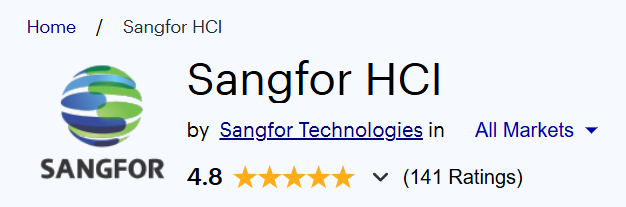
While Sangfor HCI, a complete server virtualization solution, is recognized by Gartner as an innovative platform that integrates computing, storage, networking, and security into a single software stack, aSV functions independently as a powerful compute virtualization layer, making it suitable for organizations prioritizing hypervisor performance without unnecessary stack complexity.
Core Capabilities of aSV
- Type 1 Architecture: Direct hardware access ensures minimal latency and stable performance

- Optimized I/O Stack: Enhances throughput for demanding enterprise workloads
- Enterprise Scalability: Supports dynamic resource allocation across hybrid environments
- Built-in Security Features: Incorporates isolation, encryption, and policy enforcement at the hypervisor level
- Simplified Operations: Reduces dependency on multiple tools or complex configurations
How Do I Choose the Best Bare Metal Hypervisor for My Needs?
If you want to enjoy the bare metal hypervisor benefits, start with your workloads.
- Latency-sensitive databases require high-performance, low-overhead environments.
- Dynamic workloads benefit from scalable resource allocation
- Hybrid deployments demand interoperability across cloud platforms
Wait! Before making the final decision, you must check for the real-world validation through proof of concept (POC).
Sangfor offers POC deployments to validate performance before committing to production. And prioritize vendors with proven hybrid cloud interoperability; it’s the capability that scales with your infrastructure over time.
Market Perspective on Sangfor aSV
Independent recognition matters. Sangfor’s virtualization capabilities, including aSV, have gained recognition across analyst platforms and user communities. Here’s what the analyst and user community have said.
* Recognized in the 2025 Gartner Market Guide for Server Virtualization Platforms.
User feedback often highlights:
- Simplified infrastructure
- Reliable performance
- Responsive vendor support
These indicators reflect real-world adoption across industries such as banking, education, and enterprise IT.
Enterprises need a Foundation, not complexity.
Data center modernization is really about building a base you can grow on without piling on extra complexity. A bare‑metal hypervisor sits at the heart of that foundation, and the one you choose will influence performance, your security posture, how much time your team spends maintaining it, and the long‑term cost.
Sangfor aSV approaches this foundation with a focused design-
- Prioritizing performance
- Reducing complexity
- Enabling scalable hybrid environments without overengineering the stack.
For enterprises evaluating long-term infrastructure decisions, the question is not just about features, but about sustainability: whether the platform supports growth without introducing unnecessary complexity.
Also Read: SSIS 469 Causes, fixes and Prevention